


The new life of a former military complex
1. Context and Vision
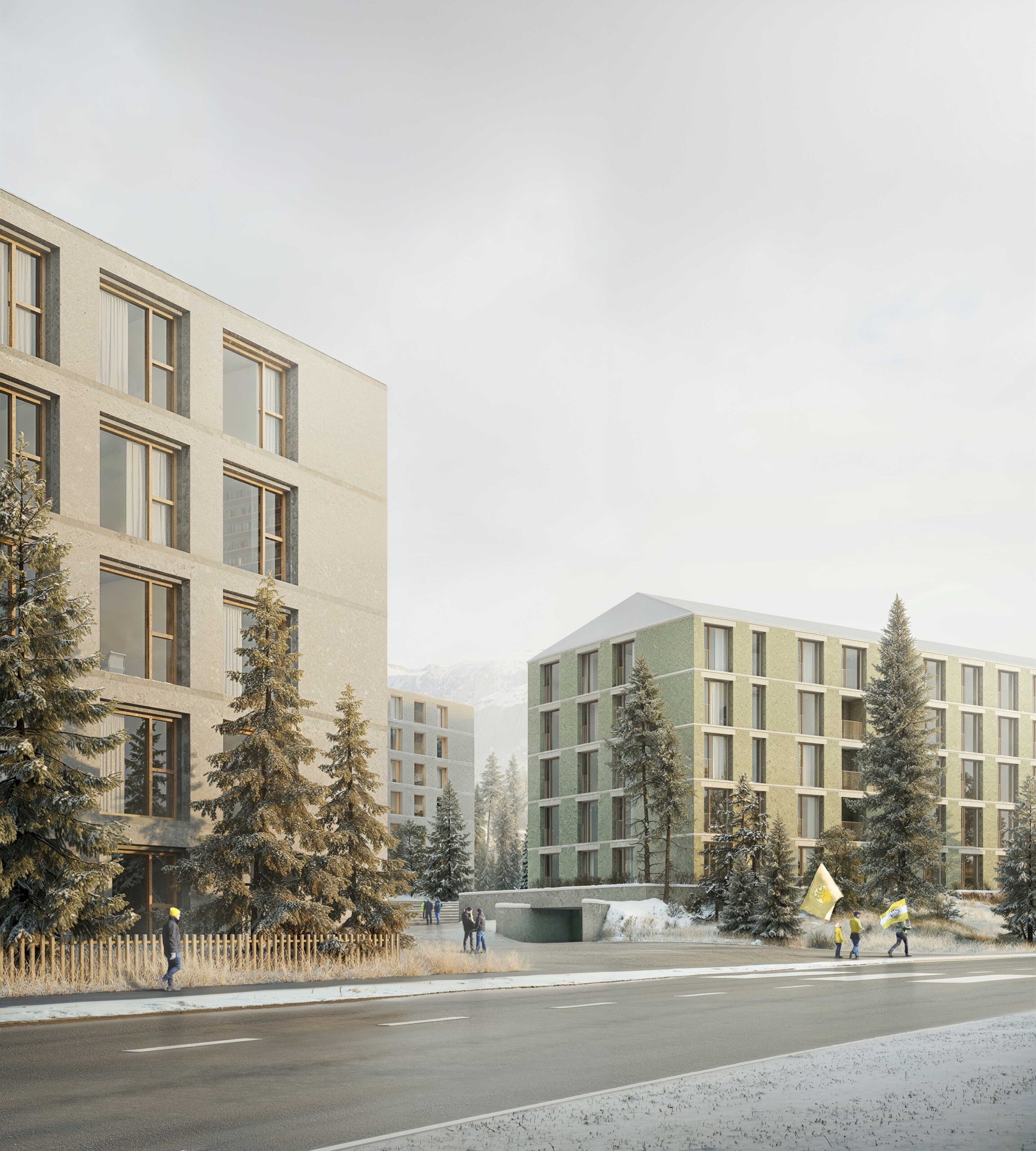
The redevelopment of the former Enrico Federico barracks in Brunico, a beautiful town in South Tyrol, transforms a strategic edge zone into a dynamic urban connector. Positioned between rail and industrial areas, the site’s redesign draws on Richard Sennett’s “open city” concept, promoting porosity, adaptability, and functional diversity. Rather than a closed enclave, the project proposes an integrated, evolving neighborhood that interacts with nearby sports facilities, green spaces, and services.
2. Design Strategies
I. Porosity:
The plan opens the site through plazas, courtyards, and bike-pedestrian routes, enhancing access to Via San Lorenzo, the intermodal hub, schools, and sports venues like the new hockey arena.
II. Flexibility:
A 6.6-meter structural grid supports modular housing that adjusts to different needs. A limited set of building types, with flexible floor plans, allows varied unit configurations for diverse users.
III. Variety:
Three building variants, differentiated by layout and aggregation, create a visually cohesive yet architecturally rich environment. Apartments offer layouts for families, students, or professionals.
3. Public Spaces, Mobility, and Green Areas
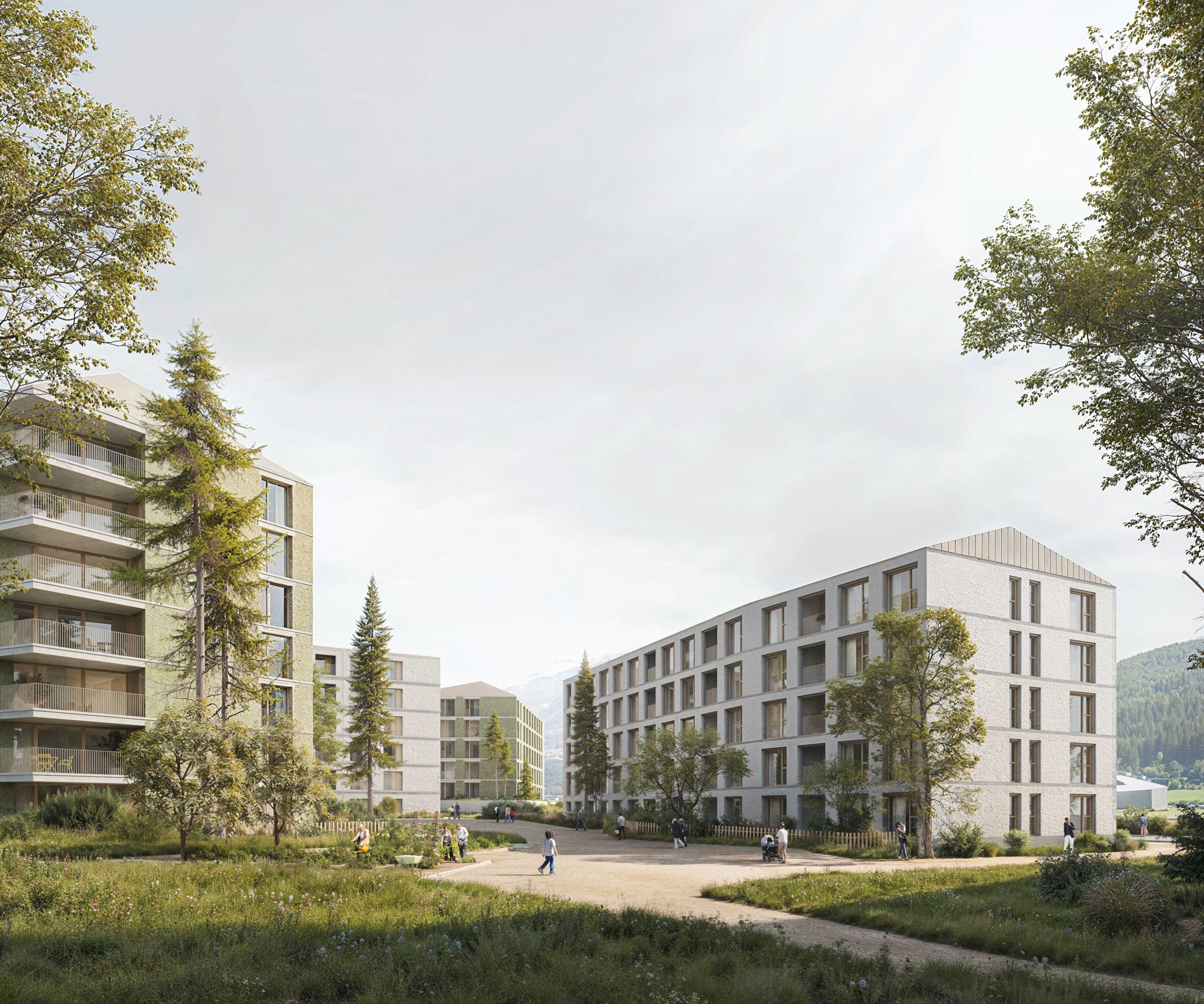
The heart of the new neighborhood is a central square near Via San Lorenzo, which serves as both a gateway and a gathering place. It connects easily to the hockey arena and town center, encouraging public use and interaction. Inside the district, three open courtyards, linked by walkways and a central plaza, create a continuous flow of green, social spaces that promote community life.
A network of pedestrian and bike paths runs throughout the area, connecting key destinations like the railway and arena while supporting sustainable mobility. Public transport is enhanced by a new stop near the square, improving access to buses and trains.
Green areas play a vital role, including a linear park along the railway designed with food forest principles to support biodiversity and provide communal space. Low-maintenance plantings and shared gardens offer residents opportunities for recreation, education, and social engagement. Parking is partially underground to reduce land use, with a lower parking ratio that aligns with Brunico’s sustainable mobility goals.
4. Housing and Architecture
Modular design enables flexible unit layouts, with shared facilities (like laundry rooms) optimizing space. Ground-floor units include private gardens, while upper floors offer a mix of unit sizes. Architectural coherence is ensured through unified facades, pitched roofs, and protective loggias. Dual-aspect subsidized units enhance light and ventilation.
5. Conclusion
This regeneration project redefines a peripheral area as Brunico’s southern gateway — a porous, adaptable, and inclusive neighborhood that evolves with the city. Blending residential comfort, ecological sensibility, and urban connectivity, the development sets a model for sustainable transformation.
- Assignement
Project competition - Status
Honorable mention. Unbuilt - Client
Comune di Brunico - Size
91.336 m3 - Team
Marta Giulia Micheletti
Giulia Cappelletti - Images
Vedo. architectural visualization